
RISE OF REAL ESTATE
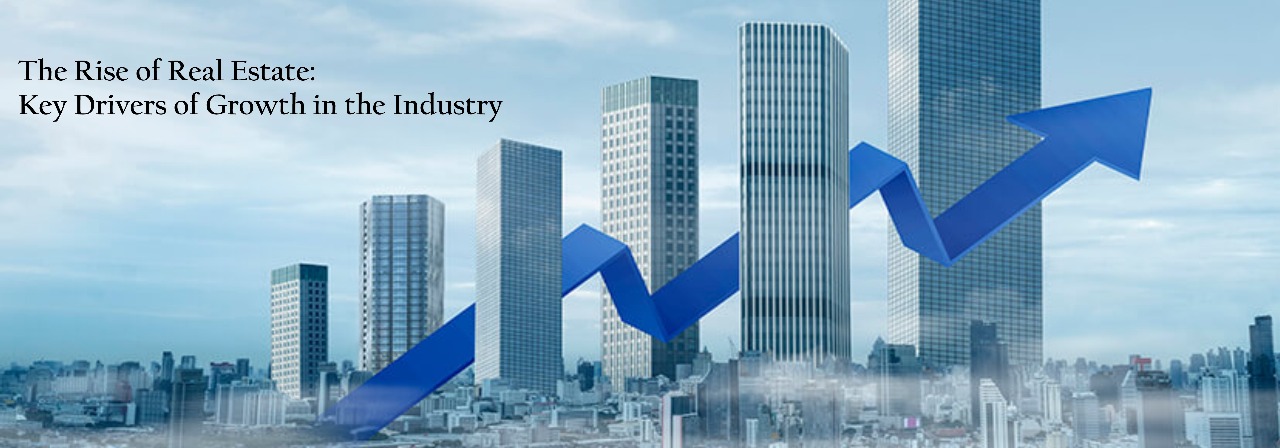
The Rise of Real Estate: Key Drivers of Growth in the Industry
 25 November 2025
Share :


The real estate industry, a cornerstone of global economies, is currently experiencing a period of significant growth and transformation. Far from being a static market, it's a dynamic sector constant
1. Economic Prosperity and Stability
At the heart of real estate growth lies a robust economy. When economies thrive, characterized by healthy GDP growth, rising employment rates, and increased consumer spending, the demand for both residential and commercial properties naturally surges.
- Job Creation: More jobs mean more disposable income, leading to higher homeownership rates and a greater need for rental properties. It also fuels demand for office spaces and commercial establishments.
- Business Confidence: A positive economic outlook encourages businesses to expand, driving demand for commercial real estate like offices, retail spaces, and industrial facilities.
- Inflation Hedge: Real estate often serves as a hedge against inflation. As the cost of goods and services rises, property values and rental income tend to appreciate, making it an attractive investment.
2. Favorable Interest Rates and Mortgage Accessibility
Interest rates are a critical determinant of affordability for prospective buyers and investors.
- Lower Interest Rates: When interest rates are low, borrowing becomes more affordable, leading to increased demand for mortgages and, consequently, higher property purchases and investments. This stimulates market activity and can drive up property prices.
- Mortgage Accessibility: Easier access to credit and flexible lending criteria from financial institutions empower more individuals to enter the real estate market, further boosting demand.
3. Demographics and Urbanization Trends
Population dynamics play a pivotal role in shaping real estate demand.
- Population Growth: A growing population naturally requires more housing, driving demand across all segments of the real estate market.
- Urbanization: The ongoing global trend of people migrating from rural to urban areas in search of better economic opportunities and lifestyles is a powerful driver. This concentration of population in cities intensifies the demand for residential, commercial, and retail spaces, often leading to increased property values in metropolitan areas.
- Changing Household Structures: The rise of nuclear families, single-person households, and even multigenerational living arrangements influences the type and size of homes in demand.
- Millennial Influence: As millennials enter their peak homebuying years, their preferences for specific housing types, locations, and amenities are significantly shaping market trends.
4. Government Policies and Infrastructure Push
Government actions and initiatives can profoundly impact the real estate landscape.
- Supportive Policies: Tax deductions, subsidies, and schemes like affordable housing initiatives can stimulate demand and make properties more accessible. Regulations like RERA (Real Estate Regulation and Development Act) in India, for example, have increased transparency and boosted buyer confidence.
- Infrastructure Development: Significant government investment in infrastructure projects like roads, railways, airports, and public transport systems greatly enhances connectivity and accessibility, making surrounding areas more desirable and driving up property values. Smart city initiatives also contribute to this growth.
- Zoning Laws and Regulations: These policies influence land use, development density, and the types of properties that can be built, directly affecting supply and demand dynamics.
5. Technological Advancements (PropTech)
Technology is revolutionizing every facet of the real estate industry, from how properties are marketed and sold to how they are managed.
- Digital Transformation: Online property portals, virtual reality (VR) and augmented reality (AR) tours, and 3D modeling are making property search and viewing more efficient and immersive.
- Data Analytics and AI: Big data and artificial intelligence are enabling predictive analytics for market trends, optimizing pricing strategies, identifying investment opportunities, and streamlining property management tasks.
- FinTech in Real Estate: Digital loan applications, automated credit assessments, and crowdfunding platforms are simplifying financing and democratizing real estate investment.
- Smart Homes and Green Buildings: The integration of IoT devices for automation, energy efficiency, and sustainable building practices is not just a trend but a growing demand, influencing property development and attracting tech-savvy and environmentally conscious buyers.
- Construction Innovation: Technologies like Building Information Modeling (BIM) and 3D printing are enhancing project planning, reducing construction time and costs, and promoting sustainable building methods.
6. Supply and Demand Dynamics:
The fundamental economic principle of supply and demand remains a core driver. When demand outstrips supply, prices tend to rise. Factors influencing supply include land availability, construction costs, and regulatory approvals. When new launches are calibrated to meet consistent buyer demand, as seen in the Indian market with a focus on premium segments, it contributes to stable pricing growth.
Related Blogs

Residential Land in North Goa: Top Locations, Costs & Growth Prospects

Residential Land in Goa: A Comprehensive Buyer’s Guide for Home Builders and Investors

Colonial Infrastructure Near Sambhar Lake in Phulera, Jaipur

National Highway and its Role in Connecting Phulera

Top Reasons to Buy Residential Land in Goa for Future Appreciation & Lifestyle

Why Now Is the Best Time to Buy a Villa or Villa Plot in Goa: Market Trends & Investment Benefits

Best 1BHK Apartments in Greater Noida – Affordable Luxury Living at AM Atuliyum Homes

Best 1BHK Apartments in Greater Noida | AM Atuliyum Homes

Premium 3BHK Apartments at Affordable Prices – Discover Luxury Living at AM Atuliyum Homes

Why Affordable Apartments Give Better ROI
Is 2026 the Right Time to Invest in Real Estate?